Wednesday, February 1, 2012
Mentors: Unrealized Weapon of an Young Entrepreneur
Tuesday, January 17, 2012
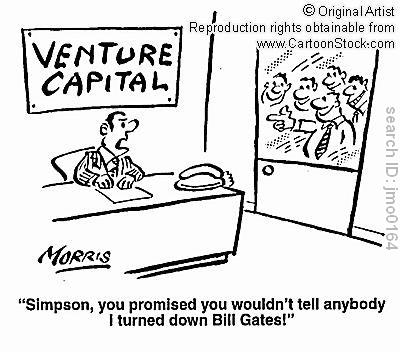
The State of Venture Capital in 2012
On balance, the VC industry is likely to end 2011 near the bottom of a decade of lousy returns for their limited partners. And with fundamental changes in the way startups operate and finance themselves, this decade of VC investment doom has created serious questions about whether venture capital can ever rise from the ashes.
Taking the long view of VC investing, 2011 looks like it will end with at most a quarter of the level of capital invested compared to its all-time 2000 high. In 2000, total VC invested hit nearly $100 billion -- growing at an annual rate of 68 percent since 1995 -- the year that Netscape went public, according to the National Venture Capital Association.
Meanwhile, when you subtract out all the fees and expenses from the returns that VCs generate for their limited partners, what you get is a surprisingly lousy return on investment.
For the decade ending June 2011, VCs earned an average of 1.3 percent for their long-suffering investors. Compared to returns from the Dow Jones Industrial Average (4.2 percent), the Nasdaq (2.5 percent) and the S&P 500 (2.7 percent), the historical statistics do not bode well for attracting new investment.
What's more, if you look at the 10 year return of VC funds -- they typically hold onto client money that long -- you see that returns to limited partners were negative in the decade ending each quarter between June 2010 and March 2011.
The one brightish spot for VC in 2011 -- that could carry over to 2012 -- was the post-IPO returns of seven prominent venture-backed start-ups. After all, by my calculations, those seven were up 2 percent on average through December 9. But that small increase masked wide variations between winners like LinkedIn, which is up 60 percent from its IPO and Demand Media, down 54 percent from its opening.
If you happen to be working on a startup that competes in a market segment where VCs have just made big gains, then the peer VCs who missed out will be eager to invest in your company in 2012. Otherwise, you could be in for a tough sell.
Starting a Business to Fund Your Startup Idea
Failing to secure investors, Casey and partner Corey Stanford instead opened a web consulting firm, Clariwebs, with the idea that they would use the profits from that venture to fund their true passion. After more than a year of bootstrapping, they dissolved Clariwebs and launched Blazetrak (along with a third partner, Ronald Harrison), bringing in revenue from day one. Two years later, the site boasts approximately 50,000 registered users from 202 countries and features commentary from 400 celebrities and experts. We asked Casey about making the transition from Clariwebs to Blazetrak.
How much of Clariwebs' revenue did you put into Blazetrak?
It wasn't a lot of money. Because we created this culture of bootstrapping, it only ended up being $10,000 or $15,000. We were using our own internal team to do a lot of the development work on Blazetrak. There was a lot of sweat that went into it.
How much time did you spend on each business?
We were probably 70 percent on the projects for Clariwebs. In the background, we were constantly building modules for Blazetrak. As we got closer to launching and it got more exciting, the amount of time we were spending on Blazetrak increased. By the final run, we were probably at 70 or 80 percent with Blazetrak.
Did you tell clients about the new business?
We did--particularly the ones we had established strong relationships with and who had become dependent on us for making decisions about their online businesses. It's hard, because you're trying to sustain and take care of customers for one business while in the back of your mind you're thinking about raising money for something else that you feel passionate about.
Any tips on starting a business to finance a product launch?
If you're starting a company or you're doing consulting specifically to raise money for a bigger idea, you have to be 100 percent vested in and committed to why you're doing it. The company that you're creating or the consulting work that you're doing to raise funds could be a big temptation once it starts making a lot of money. You can get really complacent. When we switched over fully to Blazetrak, that's when we started getting all these calls about potential jobs that would have been great if we were still doing Clariwebs. We were making $2,000 our first month on Blazetrak and thinking, "Wow--we could have taken a $30,000 or $40,000 Clariwebs project this month."
What's the biggest downside of funding a startup this way?
It's painful to use your own money, especially when you'd rather spend it on groceries. But that's what makes it a good thing. You get really smart with how you spend it. You say, "We really need to buy this software solution." And then you say, "Is this the right one? Can we find a cheaper version? Can we build it ourselves?"
You start to do a lot of research so you can spend less money or can learn a skill that will save you money over the long term. I figured out how to do our financials for Clariwebs by reading a book on QuickBooks. I use those skills even today.
We got so much out of Clariwebs that helped us with Blazetrak. A lot of the operational stuff, the staff and the work we did morphed over to Blazetrak. The value wasn't just monetary--we gained experience and relationships, too.
Monday, January 16, 2012
Why Crowdfunding is Bad for Business
Startup Mentor is a place for all the Startups to find their virtual mentors. The forum is dedicated to giving ideas to the aspiring entrepreneurs and the first generation entrepreneurs. If you fee that you can contribute to the community of entrepreneurs by providing your articles, opinions, analysis and case studies, please send an email to startupmentor@gmail.com
Friday, January 13, 2012
Innovation from Amazon, Starbucks and USPS
How do the big, name-brand companies stay on top? One answer is innovation. Besides acquiring smaller, innovative companies, most giant brands also put a lot of energy into research and development. So they're constantly testing out new ideas in every element of their business, from marketing strategy to products.
Here are three of latest and greatest ideas that recently caught my eye, which come courtesy of Starbucks, Amazon and UPS:
Starbucks recently opened a portable store in the Seattle area that's made from four stackable shipping containers. The store offers many possibilities. It's moveable like a food truck, but offers a different look and feel. Maybe they could plop it down in different cities, or as a test store in a prospective market. If customers don't come, they could try again a few blocks away.
At the same time, the store makes a statement about Starbucks' commitment to the environment. It's essentially a recycled store. On the exterior reads the company's motto: "regenerate, reuse, recycle, renew, reclaim." It also has a tiny footprint, under 500 square feet.
The company says it may use them in the parking lot while stores are being remodeled or constructed. What a great way to start building your audience before you open.
For its part, Amazon is testing out a new delivery method for its many packages -- PIN-based, self-service lockers they place at a nearby 7-Eleven or other 24/7 convenience store. If you're not home much, you could pop by your locker when it's convenient and keep your packages secure in the meanwhile. They're trying out these lockers in Seattle, New York and London.
UPS likes this idea, too -- they're testing "gopost" parcel lockers outside post offices in Northern Virginia. The lockers enable customers to receive high-value items such as smartphones in a secure way, then retrieve them anytime.
These news twists show how valuable it is to rethink every aspect of your business. Not all new initiatives should be about products or services. It'll be interesting to see how these innovations are received by customers.
Mark Cuban's 12 Rules for Startups
Anyone who has started a business has his or her own rules and guidelines, so I thought I would add to the memo with my own. My "rules" below aren't just for those founding the companies, but for those who are considering going to work for them, as well.
1. Don't start a company unless it's an obsession and something you love.
2. If you have an exit strategy, it's not an obsession.
3. Hire people who you think will love working there.
4. Sales Cure All. Know how your company will make money and how you will actually make sales.
5. Know your core competencies and focus on being great at them. Pay up for people in your core competencies. Get the best. Outside the core competencies, hire people that fit your culture but aren't as expensive to pay.
Related: Mark Cuban on Why You Should Never Listen to Your Customers
6. An espresso machine? Are you kidding me? Coffee is for closers. Sodas are free. Lunch is a chance to get out of the office and talk. There are 24 hours in a day, and if people like their jobs, they will find ways to use as much of it as possible to do their jobs.
7. No offices. Open offices keep everyone in tune with what is going on and keep the energy up. If an employee is about privacy, show him or her how to use the lock on the bathroom. There is nothing private in a startup. This is also a good way to keep from hiring executives who cannot operate successfully in a startup. My biggest fear was always hiring someone who wanted to build an empire. If the person demands to fly first class or to bring over a personal secretary, run away. If an exec won't go on sales calls, run away. They are empire builders and will pollute your company.
8. As far as technology, go with what you know. That is always the most inexpensive way. If you know Apple, use it. If you know Vista, ask yourself why, then use it. It's a startup so there are just a few employees. Let people use what they know.
Wednesday, January 11, 2012
How to Raise Money for Your Startup
Raising capital for a startup venture during these difficult economic times has been a major obstacle for many aspiring entrepreneurs. But it's not impossible.
There are several steps budding business owners can take to get in front of prospective investors and to help make sure they pony over the cash you need, says Asheesh Advani, author and co-founder of CircleLending, a peer-to-peer lending service that was acquired by Virgin Money USA in 2007. He now serves as CEO of asset management services company Covestor. Advani was a speaker at Entrepreneur's Growth Conference here on Jan. 11, 2012.Raising capital for a startup venture during these difficult economic times has been a major obstacle for many aspiring entrepreneurs. But it's not impossible.
Here are Advani's best tips for landing the money you'll need to get your business off the ground:
Know the different types of investors. There are three types of people who might invest their money in your business idea: friendly investors, hobby angels and professional investors. Friendly investors are the people you know personally, namely friends and family. Hobby angels are individual investors who are most likely professionals themselves who have some money to spare. Professional investors, of course, include venture capitalists, angels and banks. "Professional investors care most about the economics of your business," Advani says. "Whether they understand your business or not, they're required to consider your business idea, as well as countless others."
Make a list of prospects. Scour your industry and your professional network to put together a first group of people and test your business pitch, he says. If the people in this initial group appear to be interested, expand your list of prospects from there.
"When I started my businesses, I wound up raising money from 75 different investors," Advani says. "Not because I wanted to. I needed to."
He suggests keeping track of your contacts, your meetings and your goals for each of the meetings. Keep in touch with the contacts throughout the pitching process.
Set a closing date. Determine a specific, official date for when interested professional investors need to get you the money they promised -- and hold them to it. When dealing with friendly and hobby angels, Advani suggests a "rolling closing date," meaning that you'll accept the investment money as soon as they're willing to give it. Also, be sure to be clear with friendly investors about what happens if the money they invest isn't paid back on time or at all.
"These are people who are close to you, so do everything you can to maintain a good relationship," Advani says.
Use middle men carefully. Third-party groups can be great for two things, Advani says. They can help connect entrepreneurs to individual investors they didn't otherwise know. Examples include peer lending and investing sites Lending Club and Prosper.
Crowd funding sites are another option. These services -- including Pro Founder andPeerbackers -- can help entrepreneurs collect numerous investments from people via social networks.
But be careful about sharing your business idea online, Advani warns. "Before you post a profile on any of these sites, remember that everyone will know what you're planning to do," he says.
Wednesday, December 28, 2011
Protect Your Business from a Rogue Employee
It's a sad story for Gilbert Sanchez, the glass installer, but what, you ask, does this have to do with my company or start-up? Let's suppose for a moment that instead of installing glass, Sanchez worked for you and, rather than uploading the movie from his home, he did so using his work computer and your company's Internet connection. This circumstance may carry implications for businesses.
Recently, a raft of lawsuits have appeared accusing thousands of individuals of illegally uploading and downloading materials in violation of U.S. copyright laws. Attorneys for film companies -- including one Los Angeles plaintiff that sued more than 5,800 individuals for downloading one particular adult film -- file many of these suits.
OK, so you probably won't see many of these films at the Academy Awards celebration in February, but the plaintiffs in these lawsuits are hell-bent on collecting settlements from a large number of individual defendants. They're in the process of issuing subpoenas to Internet service providers to obtain the name and address of individual subscribers -- including businesses -- to pursue mass settlements.
The question is, what do you do if your company is subpoenaed as a result of a mass filing? TheElectronic Frontier Foundation, a nonprofit founded in 1990 to defend digital rights, says that because these cases are unique you should immediately contact an attorney in either the state where the lawsuit was filed or in the state where your business is incorporated.
Stewart Kellar of the San Francisco-based E-ttorney at Law agrees, but says business owners slapped with a mass file-sharing lawsuit also need to have an Internet Usage/Copyright Infringement policy in place to avoid such legal actions in the first place. He says that policy "should state in no uncertain terms that the Internet is to be used for business and (maybe) personal email use only and for no other purpose."
Kellar suggests that if your business does receive a subpoena from its ISP, it should first be determined if the infringement occurred on a work computer by an employee. If so, the company can offer up the employee to the plaintiff, pay the settlement fee and seek reimbursement from the employee. Or a company can just ignore the demand letter and see if the plaintiff will proceed and make good on its threats.
"A business that provides an Internet connection to its employees or the public is itself an ISP," says Keller. "Unless it knew about the infringing activity and then induced or facilitated that infringement, contributory liability is very unlikely."
Monday, December 12, 2011
What Your Business Can Learn From Apple's Battle with Samsung?
If you haven't been paying attention to the ongoing court battle between Apple and Samsung, you're missing an epic conflict over patents and trademarks, both of which are often overlooked by entrepreneurs when attempting to launch a new product or service.
The dispute centers on Apple's claims that Samsung's products infringe upon its design patents. Per the latest in the conflict, a U.S. District judge ruled last Friday that Apple failed to meet its burden of showing a likelihood of irreparable harm in the injunction it sought against Samsung. As a result, Samsung, the world's largest consumer electronics company, now has the go ahead to continue selling its Galaxy S 4G, Infuse 4G, and Droid Charge phones and Galaxy Tab 10.1 tablet in the U.S.
It's an early Christmas gift for Samsung, but winning a battle does not the war win, according toChristopher V. Carani, a partner in the intellectual property law firm of McAndrews, Held & Malloy and chair of the American Bar Association's Design Rights Committee. Here's what Carani has to say about this seven-month-old court fight and why business owners should pay attention to future skirmishes:
Preliminary injunctions are hard to win but do have impact. Apple had an uphill battle in persuading a judge to pull Samsung's targeted products off the shelves prior to the fact-finding discovery process and full trial based on the merits of Apple's claims. In this case, even though Samsung prevailed on the preliminary injunction, the motion created delay and uncertainty in Samsung's U.S. launch.
Apple's design patents strategy proved effective. Apple's strategy of applying for multiple design patents for the iPhone enabled it to protect itself and was effective in ensnaring Samsung's tablet and smartphone products.
Prior art searches to invalidate patents are critical. When someone claims your product violates their patent, you conduct a search for "prior art" -- that is, anything proving that a product or service existed prior to a given date. Samsung's saving grace in this latest round was that its litigation team located prior art references that undermined the validity of one of Apple's iPad design patents. What Samsung discovered was a 1994 Knight-Ridder video depicting a tablet newspaper of the future, which looks very similar to the iPad and Galaxy Tab 10.1 tablet.
While Samsung doesn't have to take its products off store shelves, the judge found in Apple's favor with respect to one of Apple's iPhone design patents. As a result, Apple has an excellent chance of obtaining a large damages award for that patent infringement as well as for lost profits from Samsung's sales of the Galaxy S 4G and Infuse 4.
Sunday, November 13, 2011
How to Start New Hires on the Right Track
Assessing employees starts on Day One. Your hiring process shouldn't be complete until you have a fully-oriented employee with their own development plan -- a clear plan of action that will engage and hold your new hire accountable.
Because the sooner you set expectations for your employees, the more likely you are to have a productive team that supports and grows your business. And that isn't the only benefit. There are three primary reasons to create individual development plans for managing performance. A development plan will:
1. Set expectations for performance. It gives employees clear expectations for their results. Statements in writing mean there is a greater likelihood of meeting or exceeding expectations. Having clear goals makes them more achievable.
2. Create a coaching document and put a process in place with a road map for advancement and a schedule to review progress, which holds managers accountable for providing feedback.
3. Create a benchmark that shows growth and improvement or the lack of progress against goals. This benchmark will assist you in developing your team members at all levels. Creating a record of improvement will make it easier to adjust the job fit for the employees and to make decisions in a more timely way about where you want to invest in developing employees.
Development plans show what employees can do to grow and develop, to advance, to become more valued, and to be more satisfied in their work. They also point out what kind of support and assistance they will need to get where they are going faster.
Components of the Plan
One mistake many managers make, often because they use poorly designed development plan templates, is to take on too many challenges at once. Keep the plan as simple as possible. Identify a combined total of two or three measurable objectives within the following three job-related categories:
- Focus on the employee's career growth. Examples include attending classes, seminars or workshops, or participating in on-the-job training or self-study programs (e.g., books, DVDs or web-based training).
- Help the employee improve personal aspects of his or her performance, behavior or conduct. Examples of task-oriented performance goals are improving computer proficiency, time management or presentation skills. Or the employee can focus on correcting behavioral problems that negatively impact group morale, job performance or job satisfaction. Examples of such goals are developing conflict resolution or stress reduction techniques and building collaborative coworker relationships. As with professional development goals, effective performance objectives are well defined, are measurable, and are clearly linked to specific job-related outcomes.
- Provide specific assignments to participate in or manage ongoing or future projects. When setting project-oriented goals, outline the scope of the role the employee is to play, list resources and completion time frame, and define the desired result.
Components of an Effective Objective
Objectives must be ones the employee has agreed to accomplish within a specified time. The goals should be specific and challenging but attainable. Identify everything that both the employee and manager need to provide to accomplish the goals as an objective. Each objective should have four parts:
- State the desired achievement for task mastery or improved behavior.
- Define the applicability of each goal to the function.
- Specify the method of learning.
- State the time frame for achievement.
When to Assess
Many companies tie development to performance appraisal. While it's true you need to set expectations before you can identify areas for growth, employee development is an ongoing process. Reviews should be scheduled as often as needed according to the support, advancement, and abilities of each employee.
Each job and organization will evaluate and measure its employees using a variety of tools. Some of the most common include:
- Biannual or annual performance standards/reviews/appraisals: These usually include quantitative and qualitative sections where both the employee and manager have opportunities to make remarks. They state expectations and goals. The employee's performance is measured against these goals at the end of the time period. Traditionally, these appraisals are directly tied to annual bonuses or pay increases.
- Budget and quota measurements: These include measuring a person's performance against budget expectations and quotas. Employees are evaluated based on how well they perform, and rewards are directly tied to performance.
Regardless of how you choose to evaluate employees, using a development plan customized for each individual will make the performance evaluation process easier and fairer and offer ongoing opportunities to provide coaching and feedback throughout the year, not just at performance review time. It also reduces the risk of surprise in the results for the employees.
The manager and employee will work on the development plan together, but the more involved the employee is in determining the areas to work on, the more committed that individual will be to accomplishing the goals. The objective is to create an environment that encourages continuous feedback from managers, which will help employees advance more quickly, achieve more, and avoid unnecessary problems and setbacks.
How Steve Jobs Saved Apple
When Steve Jobs returned to Apple in 1997, the tech company he co-founded more than two decades earlier was on the brink of failure. During the final quarter of 1996, Apple's sales plummeted by 30 percent. Microsoft was the dominant computer company in the market.
As Isaacson recalls in his biography on Jobs, a Fortune magazine story from that time said this of the company: "Apple Computer, Silicon Valley's paragon of dysfunctional management and fumbled techno-dreams, is back in crisis mode, scrambling lugubriously in slow motion to deal with imploding sales, a floundering technology strategy, and a hemorrhaging brand name."
Fresh off a partnership deal with Microsoft that injected Apple with $150 million, one of Jobs' first goals as CEO was to review the company's sprawling product line. What he found out was that Apple had been producing multiple versions of the same product to satisfy requests from retailers. For instance, the company was selling a dozen varied versions of the Macintosh computer.
Unable to explain why so many products were necessary, Jobs asked his team of top managers, "Which ones do I tell my friends to buy?" When he didn't get a simple answer, Jobs got to work reducing the number of Apple products by 70 percent. Among the casualties was the Newton digital personal assistant. Unfortunately, the cut-backs also resulted, in part, in a workforce reduction of about 3,000 employees.
"Deciding what not to do is as important as deciding what to do," Jobs says in the book. "It's true for companies, and it's true for products."
Moving forward, Jobs' strategy was to produce only four products: one desktop and one portable device aimed at both consumers and professionals. For professionals, Apple created the Power Macintosh G3 desktop and the PowerBook G3 portable computer. For consumers, there was the iMac desktop and iBook portable computer. (According to Jobs, the "i" emphasized that the devices were directly integrated with the internet.)
The move to a smaller product line and a greater focus on quality and innovation paid off. During Jobs' first fiscal year after his return, ending in September 1997, Apple lost $1.04 billion and was "90 days from being insolvent," Jobs says in the book. One year later, the company turned a $309 million profit.
Jobs' plan also laid the groundwork for Apple's continued innovation. The company introduced revolutionary products including the iPod portable digital audio player in 2001, an online marketplace called the Apple iTunes Store in 2003, the iPhone handset in 2007 and the iPad tablet computer in 2010.
Thursday, October 6, 2011
RIP Steve Jobs
Entrepreneur Steve Jobs, co-founder of Apple Computer Inc., died Wednesday. He was 56.
Jobs' vision for a "computer for the rest of us" yielded a host of products and services that have revolutionized the tech industry, among numerous others. During his reign at the top of Apple, the company introduced the iPod portable digital audio player in 2001, an online marketplace called the Apple iTunes Store in 2003, the iPhone handset in 2007 and the iPad tablet computer in 2010.
While Jobs struggled with health issues including a pancreatic tumor and a liver transplant, Apple's products continued to resonate with consumers, driving mind-boggling profits for the company. Apple says it has sold more than 300 million iPods, over 100 million iPhones and more than 15 million iPad devices. The company has sold billions of songs from its iTunes Store.
Here's a collection of reactions of Jobs' death from fellow entrepreneurs, tech personalities and other notable figures:
Bill Gates, founder of Apple rival Microsoft:
"I'm truly saddened to learn of Steve Jobs' death. Melinda and I extend our sincere condolences to his family and friends, and to everyone Steve has touched through his work.
"Steve and I first met nearly 30 years ago, and have been colleagues, competitors and friends over the course of more than half our lives.
"The world rarely sees someone who has had the profound impact Steve has had, the effects of which will be felt for many generations to come.
"For those of us lucky enough to get to work with him, it's been an insanely great honor. I will miss Steve immensely."
Guy Kawasaki, entrepreneur, venture capitalist and former Apple chief evangelist
"May Steve rest in peace. My deepest sympathy to his loved ones. No CEO has done more for his customers, employees, and shareholders than Steve.
"He changed the world -- my world, your world, the entire world. His words to live by: 'There must be a better way.'
"You changed our lives, Steve, and you showed us that there is a better way. . .we will miss you."
Mark Cuban, Internet entrepreneur and billionaire:
"He was a once-in-a-generation mind. His ability to understand and translate pop culture was second to none. He will be missed."
Google co-founder Sergey Brin:
"From the earliest days of Google, whenever Larry and I sought inspiration for vision and leadership, we needed to look no farther than Cupertino. Steve, your passion for excellence is felt by anyone who has ever touched an Apple product (including the Macbook I am writing this on right now). And I have witnessed it in person the few times we have met."
AOL co-founder Steve Case:
"I feel honored to have known Steve Jobs. He was the most innovative entrepreneur of our generation. His legacy will live on for the ages."
Apple Board of Directors:
"Steve's brilliance, passion and energy were the source of countless innovations that enrich and improve all of our lives. The world is immeasurably better because of Steve."
U.S. President Barack Obama:
"By building one of the planet's most successful companies from his garage, he exemplified the spirit of American ingenuity. By making computers personal and putting the Internet in our pockets, he made the information revolution not only accessible, but intuitive and fun. And by turning his talents to storytelling, he has brought joy to millions of children and grownups alike. Steve was fond of saying that he lived every day like it was his last. Because he did, he transformed our lives, redefined entire industries, and achieved one of the rarest feats in human history: He changed the way each of us sees the world.
"The world has lost a visionary. And there may be no greater tribute to Steve's success than the fact that much of the world learned of his passing on a device he invented."
The overwhelming outcry of sadness, wrapped in accolades, for Jobs also flooded the Twittersphere.
Michael Dell, founder of Dell Inc.
@MichaelDell Today the world lost a visionary leader, the technology industry lost an iconic legend and I lost a friend and fellow founder. The legacy of Steve Jobs will be remembered for generations to come. My thoughts and prayers go out to his family and to the Apple team.
Richard Branson, Virgin Founder
@richardbranson RIP Steve Jobs. A truly great businessman. Inspiration to so many. A real Family man. He will be sorely missed.
Kevin Rose, founder of Digg.com
@kevinrose damn.. damn.. damn.. RIP Steve Jobs
Ben Kaufman, founder of Quirky
@benkaufman "Those who are crazy enough to think they can change the world, are the ones who do.". Thanks Steve. Your products started me on this path.
Gurbaksh Chahal, serial entrepreneur
@gchahal Thank You, Steve Jobs.
Robert Scoble, tech evangelist and blogger
@Scobleizer Rainbow over Silicon Valley. Steve Jobs RIP. @ Sunnyvale
Scott Heiferman, founder of Meetup.com
@heif Sad sad sad sad sad sad sad
Ashton Kutcher, actor, investor and entrepreneur
@aplusk We have all surfed on the wake of Steve Jobs ship. Now we must learn to sail, but we will never forget our skipper.
Sunday, August 14, 2011
How to Hire Positive Employees for Your Business
No entrepreneur is an island. You were created to work with others in a positive environment.
Your business success depends on you attracting customers and employees with whom you work well together. Such cooperation challenges the familiar notions of achieving success by becoming a self-made person and pulling yourself up by your own bootstraps. Despite its familiarity, such a notion is simply a myth. You’ve been the beneficiary of working with others since before you can remember.
Do you remember your mother and father getting up at two o’clock in the morning to feed you? Of course not. Even though it happened night after night for months, depriving your parents of much-needed sleep, these gracious acts of compassionate kindness your parents offered just because they loved you slip through your memory.
There are other gracious acts of cooperation others have done for you that similarly slip through. All of these cooperative acts combine to make you who you are today -- a unique human being capable of a positive workstyle.
Cooperating completely with others presupposes that you are incomplete alone, but complete with others. Sometimes, our ego gets in the way of understanding this concept. Part of the challenge for entrepreneurs is that we are really good at so many and varied tasks that we buy the lie that we can truly do it all. The truth is if we really want to make our dreams come true, we must redefine our egotistical reality of "I can do it all" to "There is something I missed."
One of the most essential ingredients of working positively and cooperatively with others is that how much you think you accurately perceive in life, there is something you miss -- or some subject that someone else knows more about than you do.
No matter which direction your business is going -- up or down -- you can use some help. The good news is you have it. The universe is designed to partner with you, to provide resources beyond your control for your business’s well-being, including relationships with others who can help you.
The key to leveraging these relationships is to become the kind of person that you want to attract into your business life. You should be someone you would want to do business with.
Consider these questions in shaping yourself to attract positive business partners and clients:
- What are my core values, i.e., those character traits that I want to exhibit in my business relationships? What would my family members say are my core values?
- What are my life priorities--those matters in life that I consider most important not just in word, but in work behavior as well? How do my calendar and bank statement reflect these priorities?
- What is my unique contribution to make in the world through my business and how do I live into it daily?
Just as "birds of a feather flock together," you literally attract people with whom you share core values and life priorities. For example, if you conceive your business more positively, you will attract similar people with whom you can grow your business--and whom you can also help in their lives and businesses. Those who resonate on this frequency are drawn to you because of your common business life pitch.
Conversely, if your business life is more negatively grounded, you find people coming into your business--whether as customers/clients, employees/suppliers--who are more of a negative persuasion.
Do you ever find yourself complaining about your customers? They don’t pay their bills on time, or maybe they’re constantly trying to get something for nothing. Who attracted them to your business?
What about your employees? Ever hear yourself saying, "You just can’t find good help these days" or "Nobody wants to want work anymore"? Who hired these employees?
Now stop, and ask yourself: "How am I attracting these people? What is there about me that attracts them, that pitches them in my direction?"
One of the greatest challenges in creating a positive workstyle is understanding that like attracts like. These people onto whom you shift responsibility for your challenges are in your work life because you chose them. You attracted them by way of your business’s core values, your business priorities, and your business’s unique contribution.
Once you perceive your work life in a positive light, then, because you are created to cooperate completely, you begin to attract others to your team who share your positive direction. Those who choose to work positive will find their way to you.
The people around you--customers/clients, employees/employers, family/friends, and vendors/suppliers -- are there for you to lean on when the weight of doing business is too much for you to stand alone . . . and when isn’t it? These people are your team.
The article is taken from http://www.entrepreneur.com/article/222548
Saturday, August 13, 2011
The Top 10 Business Plan Mistakes
1. Misunderstanding the purpose: It’s the planning that matters, not just the document. You engage in planning your business because planning becomes management. Planning is a process of setting goals and establishing specific measures of progress, then tracking your progress and following up with course corrections. The plan itself is just the first step; it is reviewed and revised often. Don’t even print it unless you absolutely have to. Leave it on a digital network instead.
2. Doing it in one big push; do it in pieces and steps. The plan is a set of connected modules, like blocks. Start anywhere and get going. Do the part that interests you most, or the part that provides the most immediate benefit. That might be strategy, concepts, target markets, business offerings, projections, mantra, vision, whatever. . . just get going.
3. Finishing your plan. If your plan is done, then your business is done. That most recent version is just a snapshot of what the plan was then. It should always be alive and changing to reflect changing assumptions.
4. Hiding your plan from your team. It’s a management tool. Use common sense about what you share with everybody on your team, keeping some information, such as individual salaries, confidential. But do share the goals and measurements, using the planning to build team spirit and peer collaboration. That doesn’t mean sharing the plan with outsiders, except when you have to, such as when you’re seeking capital.
5. Confusing cash with profits. There's a huge difference between the two. Waiting for customers to pay can cripple your financial situation without affecting your profits. Loading your inventory absorbs money without changing profits. Profits are an accounting concept; cash is money in the bank. You don't pay your bills with profits.
6. Diluting your priorities. A plan that stresses three or four priorities is a plan with focus and power. People can understand three or four main points. A plan that lists 20 priorities doesn't really have any.
7. Overvaluing the business idea. What gives an idea value isn’t the idea itself but the business that's built on it. It takes employees showing up every morning, phone calls being answered, products being built, ordered and shipped, services being rendered, and customers paying their bills to make an idea a business. Either write a business plan that shows you building a business around that great idea, or forget it. An idea alone does not a great business make.
8. Fudging the details in the first 12 months. By details, I mean your financials, milestones, responsibilities and deadlines. Cash flow is most important, but you also need lots of details when it comes to assigning tasks to people, setting dates, and specifying what's supposed to happen and who's supposed to make it happen. These details really matter. A business plan is wasted without them.
9. Sweating the details for the later years. This is about planning, not accounting. As important as monthly details are in the beginning, they become a waste of time later on. How can you project monthly cash flow three years from now when your sales forecast is so uncertain? Sure, you can plan in five, 10 or even 20-year horizons in the major conceptual text, but you can't plan in monthly detail past the first year. Nobody expects it, and nobody believes it.
10. Making absurd forecasts. Nobody believes absurdly high “hockey stick” sales projections. And forecasting unusually high profitability usually means you don’t have a realistic understanding of expenses.